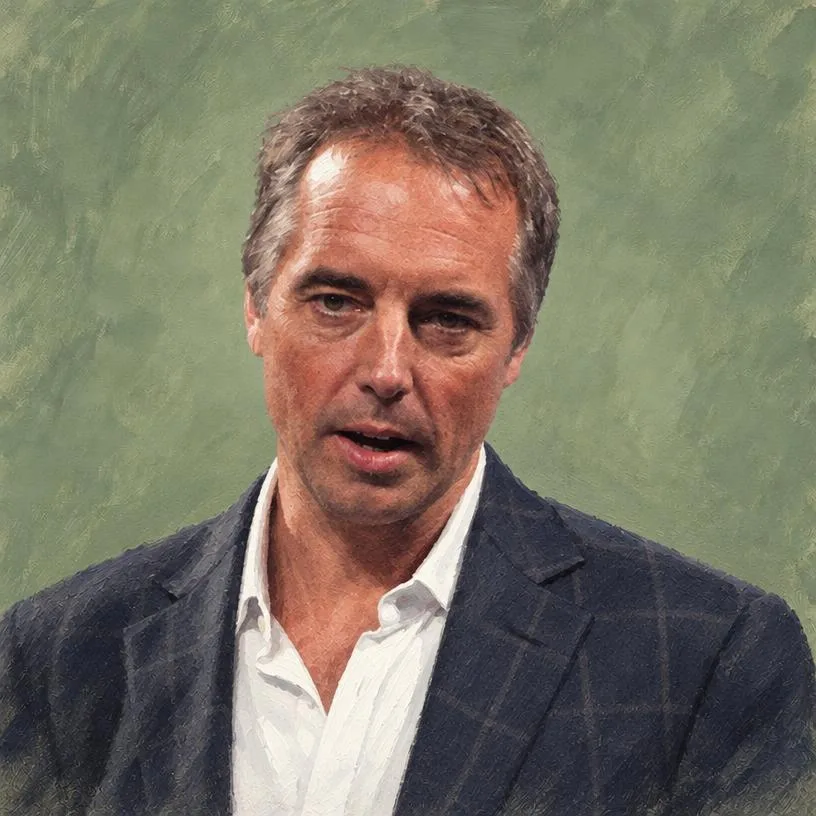
Dan Buettner
Blue Zones explorer and longevity author
Dan Buettner is an explorer and author who studies long-lived communities and shares approachable ways to make movement, nourishing food, and connection part of daily life.
“The calculus of aging offers us two options: We can live a shorter life with more years of disability, or we can live the longest possible life with the fewest bad years. As my centenarian friends showed me, the choice is largely up to us.”
Listen to story & lessons
The story
Dan Buettner’s roots are in Minnesota, where he grew up in the Saint Paul area and later attended the University of St. Thomas. The university identifies him as a member of its class of 1983. Before becoming known for longevity, he built a career around exploration and communication. Long-distance bicycle expeditions with his brother Steve took him across continents and resulted in Guinness World Records. Those journeys mattered not because endurance riding became his prescription for everyone else, but because they brought him into contact with different ways of living. His later work retained that exploratory style: travel to a place, listen closely to residents, and make their daily routines understandable to people who might never visit those communities themselves.
Buettner’s public influence grew through his work with National Geographic and his reporting on unusually long-lived populations. His November 2005 cover story, The Secrets of Living Longer, helped introduce a broad audience to the subject. The Blue Zones book followed in 2008, drawing lessons from places including Okinawa, Sardinia, and Loma Linda. He did not originate every element of this research: the blue-zone terminology emerged from demographic work in Sardinia before his broader popularization. His contribution was to combine reporting, collaboration, and memorable lifestyle themes into an accessible public message. Instead of centering a rare supplement or an extreme fitness program, that message emphasized ordinary movement, predominantly plant-based meals, social ties, and a reason to get up in the morning.
The project moved from describing communities to trying to change them. In 2009, Buettner worked with AARP on a demonstration project in Albert Lea, Minnesota, applying Blue Zones ideas to everyday environments. His books and the 2023 Netflix series Live to 100: Secrets of the Blue Zones expanded the audience further. Yet the longevity story has also faced important challenges. Critics have questioned the reliability of some extreme-age records and whether observational accounts can establish why particular populations live longer. Buettner and collaborators defend the validation work behind the original regions. These disputes should remain visible: a compelling travel narrative is not a randomized trial, and a commercial wellness program’s claims deserve scrutiny independently of the appeal of its founder or brand.
The most transferable lesson in Buettner’s work is to redesign ordinary life so useful habits require less effort. A nearby walking route, a familiar bean dish, and friends who expect to see you can be more dependable than a burst of willpower. His approach also broadens health beyond personal discipline by asking what neighborhoods, workplaces, and social groups make possible. None of that promises exceptional longevity, and people cannot choose away genetics, poverty, disability, or unequal access to care. Nor should readers begin drinking wine because it appears in some descriptions of long-lived communities. Take the work as an invitation to build a more connected and supportive daily environment, while checking health claims against independent evidence and choosing changes that fit your circumstances.
Accomplishments
- In 2005, his National Geographic cover story The Secrets of Living Longer brought longevity communities to a broad audience.
- In 2008, he published The Blue Zones: Lessons for Living Longer From the People Who’ve Lived the Longest.
- In 2009, he worked with AARP on a Blue Zones demonstration project in Albert Lea, Minnesota.
- In 2023, he hosted and co-produced the Netflix series Live to 100: Secrets of the Blue Zones.
Top 10 lessons
- 01
Build movement into ordinary routines.
Walk to a nearby errand, tend plants, or take the stairs when that is safe and realistic for you. Buettner emphasizes the everyday movement he observed in long-lived communities rather than exercise heroics; start with one repeatable activity that fits naturally into your home, transport, or working day.
- 02
Make beans a regular meal ingredient.
Add lentils, chickpeas, or other beans to a familiar soup, salad, or main dish. Buettner repeatedly features legumes in Blue Zones eating patterns; keep preparation simple and increase portions gradually if needed, so an affordable staple becomes a routine pleasure rather than a short-lived challenge or rigid dietary rule.
- 03
Put mostly plant foods on your plate.
Build more meals around vegetables, whole grains, legumes, nuts, and fruit, using flavors you already enjoy. Buettner’s plant-slant principle describes patterns across communities rather than one universal menu; focus on a sustainable shift in what you regularly eat, with individual nutritional needs and medical advice still taking priority.
- 04
Stop eating before you feel stuffed.
Serve a comfortable first portion, slow down, and pause before deciding whether you want more. Buettner connects this idea with Okinawa’s hara hachi bu tradition; use it as a cue for attention and satisfaction, not a precise calorie formula or an instruction to ignore hunger or restrict needed nourishment.
- 05
Create a daily pause for stress.
Choose a small daily ritual that helps you settle, such as a walk, prayer, a quiet conversation, or a few unhurried minutes outdoors. Buettner calls this downshifting; the useful practice is to give recovery a regular place in your day rather than waiting until stress has become overwhelming.
- 06
Name a purpose that matters to you.
Write one sentence about a person, responsibility, craft, or cause that makes your day feel worthwhile. Buettner describes purpose through ideas such as ikigai and plan de vida; translate that into a small action this week, without assuming you need to discover a grand calling before you can begin.
- 07
Invest in dependable friendships.
Arrange a recurring walk, meal, or phone call with people who are supportive and reliable. Buettner highlights Okinawan moai and other durable social circles; repetition matters more than collecting contacts, so choose a commitment that you and your friends can realistically keep through ordinary busy weeks and changing circumstances.
- 08
Make time for people across generations.
Create a manageable routine for staying close to relatives or other trusted people of different ages. Buettner’s family-first observations emphasize belonging and mutual support; this need not mean living together, and healthy boundaries matter when relationships are difficult, unsafe, or simply better sustained through smaller, more intentional contact.
- 09
Shape your surroundings to support healthy choices.
Put walking shoes where you will see them, keep convenient nourishing foods available, or invite a neighbor to share a regular activity. Buettner’s community projects emphasize making healthier choices easier by default; change one friction point in your surroundings instead of expecting motivation to carry every decision all day.
- 10
Treat longevity stories as clues, not guarantees.
Use Blue Zones observations to generate sensible habits, not to predict your lifespan or buy certainty. Age records and causal interpretations have faced criticism, while Buettner defends the research; favor independently supported choices, keep up appropriate medical care, and do not start drinking alcohol because some profiles describe wine.