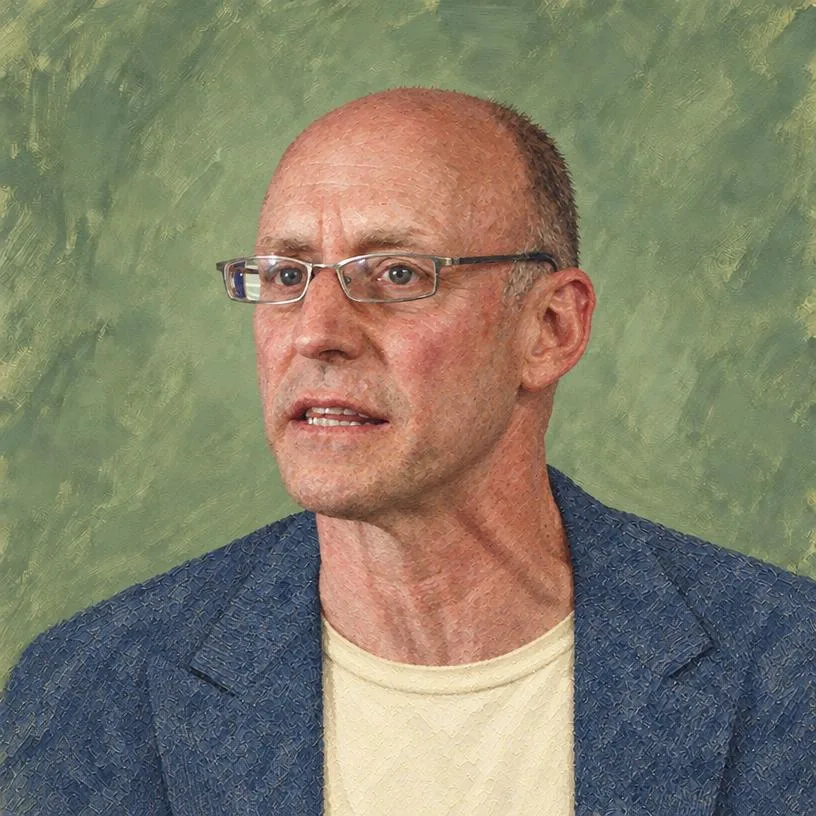
Michael Pollan
Author, journalist
Journalist who made food simple again: eat real food, not too much, mostly plants.
“Eat food. Not too much. Mostly plants.”
Listen to story & lessons
The story
Michael Pollan grew up on Long Island and studied English at Bennington College before earning a master's degree at Columbia University. He began his career as a writer and editor at Harper's Magazine, and his first books were about gardening and architecture — ordinary subjects he used to explore how people relate to the natural world.
His curiosity about food began with a simple question: where does dinner actually come from? To answer it, he bought a steer, followed corn from Iowa fields into processed foods, and foraged and hunted for a meal of his own. The result, The Omnivore's Dilemma, was named one of the ten best books of 2006 by The New York Times and changed how millions of people thought about eating.
Readers kept asking him for something simpler, so he distilled years of reporting into seven words: eat food, not too much, mostly plants. In Defense of Food and the pocket-sized Food Rules turned that idea into practical guidance, and the documentary series Cooked showed why returning to the kitchen may be the single most important thing a person can do for their health.
Later he turned to the science of the mind in How to Change Your Mind, and he has taught journalism at UC Berkeley and Harvard. His work is a reminder that health does not have to be complicated: pay attention to what you eat, cook more, share meals, and treat food as something more than fuel.
Accomplishments
- Wrote The Omnivore's Dilemma, named one of The New York Times' ten best books of 2006.
- Was named one of Time magazine's 100 most influential people in 2010.
- Created the Netflix documentary series Cooked, based on his book.
- Taught journalism as a professor at UC Berkeley and at Harvard.
Top 10 lessons
- 01
Eat food. Not too much. Mostly plants.
This simple rule covers most of what nutrition science agrees on. Fill your plate with whole foods, mostly vegetables, fruits, grains and beans, and stop when you've had enough.
- 02
Don't eat anything your great-grandmother wouldn't recognize as food.
Many packaged products are recent inventions. If a food would puzzle someone from a century ago, treat it as an occasional item rather than an everyday staple.
- 03
Avoid products with ingredients you can't pronounce.
A long list of unfamiliar additives is a sign the food has been heavily processed. Choose foods with short ingredient lists you understand.
- 04
Shop the edges of the grocery store.
Fresh produce, meat, fish and dairy usually line the outer walls of the store, while processed products fill the middle aisles. Spend most of your time on the edges.
- 05
Cook your own meals whenever you can.
Cooking puts you in control of salt, sugar and fat. Even simple home-cooked meals tend to be healthier than restaurant or packaged food.
- 06
Pay more, eat less — quality over quantity.
Better ingredients often cost more, but they are also more satisfying. Buying fewer, higher-quality foods can improve both health and enjoyment.
- 07
Eat meals at a table, with other people.
Eating at a table with others slows you down and makes meals social. You notice what you eat and are less likely to overeat.
- 08
Stop eating before you're full.
Pollan cites traditions that advise stopping when you are about 80 percent full. Pause during a meal and ask whether you are still hungry.
- 09
Know where your food comes from.
Knowing farmers, markets and seasons builds a better relationship with food. Even reading labels and asking questions is a good start.
- 10
Stay curious enough to change your mind.
Pollan has repeatedly changed his views as he learned. Approach health with open curiosity and let evidence update your habits.