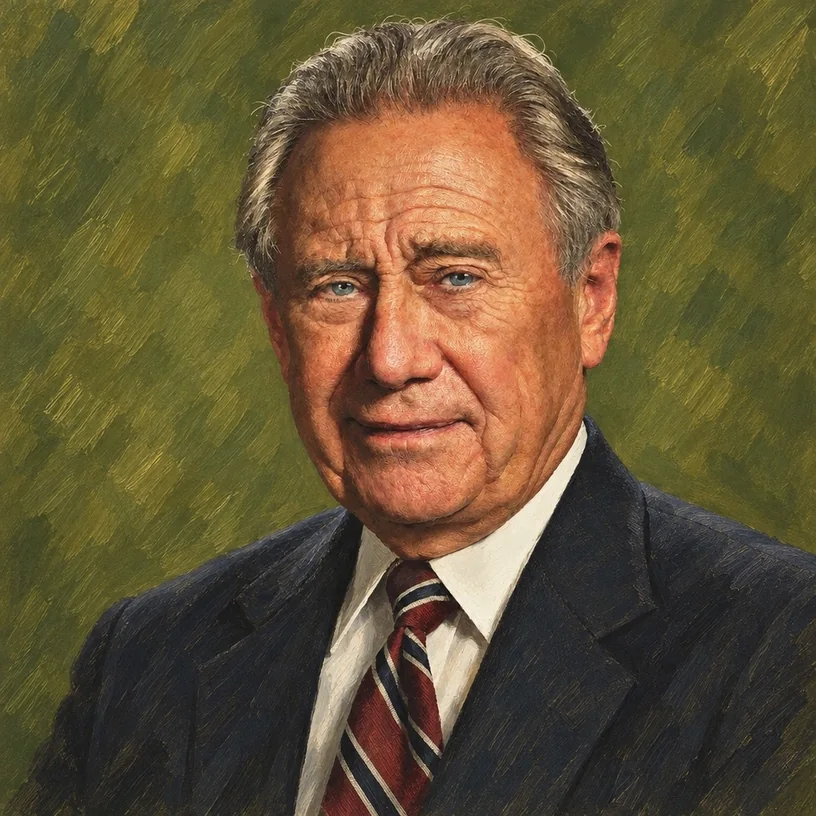
Philip Anschutz
Diversified investor; Anschutz Corporation owner; AEG founder
Philip Anschutz expanded an oil-business base into railroads, telecommunications, sports, live entertainment, and hospitality. His investments connect physical infrastructure with new commercial uses, notably railroad corridors and fiber networks. His record also includes telecom-era controversy, scrutiny of charitable donations, major medical philanthropy, and books about the American West.
“I support the rights of all people and oppose discrimination and intolerance against the LGBTQ community.”
The story
Philip Anschutz was born in Russell, Kansas, in 1939 and earned a finance degree at the University of Kansas in 1961. He returned to help manage his father’s struggling drilling business rather than following his original plan to attend law school. Oil and gas provided the starting capital and practical experience for a much wider investment career. His later reputation for diversification should not obscure those beginnings in a risky, capital-intensive industry. The early lesson is to understand the economics of an operating asset before treating it as a stepping stone, because inherited opportunity and financial uncertainty can arrive together.
Anschutz expanded into railroads, acquiring the Denver and Rio Grande Western and later Southern Pacific, whose acquisition was completed in 1988. Southern Pacific subsequently combined with Union Pacific in 1996. Railroad corridors also provided a route for telecommunications infrastructure, helping create the foundation for Qwest’s fiber network. This was an example of recognizing a second economic use for physical assets, not merely predicting demand for internet services. The broader telecom boom also brought damaging excesses and later accounting controversy at Qwest. A sound takeaway separates a valuable infrastructure insight from any assumption that every financing, valuation, or governance decision surrounding it was equally sound.
Anschutz’s entertainment interests grew through AEG, combining sports teams, venues, concert promotion, and festivals. That network made the economics of an arena inseparable from the events and audiences it could attract. His holdings and investments also extended into hospitality and film, illustrating a willingness to enter industries with very different operating rhythms. Diversification, however, does not remove risk: venues require large commitments before demand is known, and entertainment depends on discretionary spending and successful programming. The practical lesson is to identify specific operating connections among businesses rather than assume that owning many different companies automatically creates either resilience or synergy.
Anschutz has supported medical research and the University of Colorado campus that bears his name, while also backing conservative causes. Donations to organizations criticized for anti-LGBTQ positions generated public scrutiny. In 2018, he gave $1 million to the Elton John AIDS Foundation and issued a statement opposing discrimination against the LGBTQ community, while saying his foundation’s internal processes would be strengthened. His books on the American West reflect another longstanding interest, distinct from a conventional business memoir. Taken together, his career shows that capital allocation, institutional oversight, and public accountability remain connected even for an investor who generally avoids personal publicity.
Accomplishments
- Expanded from oil and gas into railroads, including the 1988 acquisition of Southern Pacific.
- Helped develop Qwest’s telecommunications infrastructure using railroad corridors.
- Built AEG into a major sports and live-entertainment business spanning venues, teams, and events.
- Authored Out Where the West Begins, published in 2015, with contributions by William J. Convery and Thomas J. Noel.
Top 10 lessons
- 01
Look for a second use.
Inventory rights, locations, relationships, and infrastructure that an existing business controls. Ask whether another industry values them differently. Railroad corridors and fiber networks illustrate the method. Verify legal rights, construction costs, and customer demand before treating a plausible adjacent use as a profitable opportunity.
- 02
Understand capital intensity.
Estimate the cash required before revenue arrives and the obligations that remain if demand disappoints. Railroads and arenas both expose owners to substantial fixed costs. Match funding duration to asset life and avoid using optimistic attendance or traffic assumptions to justify an inflexible debt burden.
- 03
Diversify with a clear thesis.
Write a separate investment thesis for each new industry, including the expertise you lack and the operator you need. Anschutz’s range shows that wealth can cross sectors, but it does not prove that unfamiliar businesses are easy. Demand explicit advantages rather than diversification for its own sake.
- 04
Connect venues with demand.
Before investing in an entertainment property, identify who will supply recurring events and who will buy tickets. Model scheduling, local competition, and the customer experience. Control of a building and relationships with content providers can reinforce each other, but neither guarantees profitable attendance.
- 05
Separate insight from valuation.
A correct view about growing demand can still produce a poor investment at the wrong price. Test conservative revenue and financing assumptions independently of your excitement about infrastructure. The telecom era is a useful warning that strategic imagination does not repeal valuation discipline or accounting requirements.
- 06
Install independent oversight.
Use directors, auditors, and risk officers who can challenge a powerful owner and senior executives. Require understandable reports across subsidiaries rather than relying on personal trust. A diversified empire needs mechanisms that surface bad news early, especially when growth and complex transactions make performance difficult to interpret.
- 07
Audit philanthropic recipients.
Review a charity’s activities, leadership, affiliated organizations, and use of restricted funds before approving a gift. Revisit recipients periodically rather than assuming an earlier review remains sufficient. Reputational and ethical responsibility extends beyond the donor’s stated intention to foreseeable effects of the funding.
- 08
Respond with verifiable action.
When credible criticism emerges, investigate the underlying facts, explain the findings, and publish corrective steps that can be checked. Anschutz’s 2018 statement and donation provide a concrete case for examining response. A public commitment matters most when grant procedures and subsequent decisions visibly support it.
- 09
Study history without mythology.
Read historical business accounts for patterns in incentives, institutions, infrastructure, and failure. Anschutz’s Western histories offer one entry point, not a universal playbook. Compare entrepreneurial achievement with its social costs and historical context so that admiration does not become an excuse to ignore consequences.
- 10
Preserve long-horizon options.
Maintain financial capacity to pursue opportunities that take years to develop, while setting limits on additional commitments. Patient capital is useful when paired with milestones and exit criteria. Avoid confusing persistence with obligation: new evidence may justify redesigning a project or declining further investment.