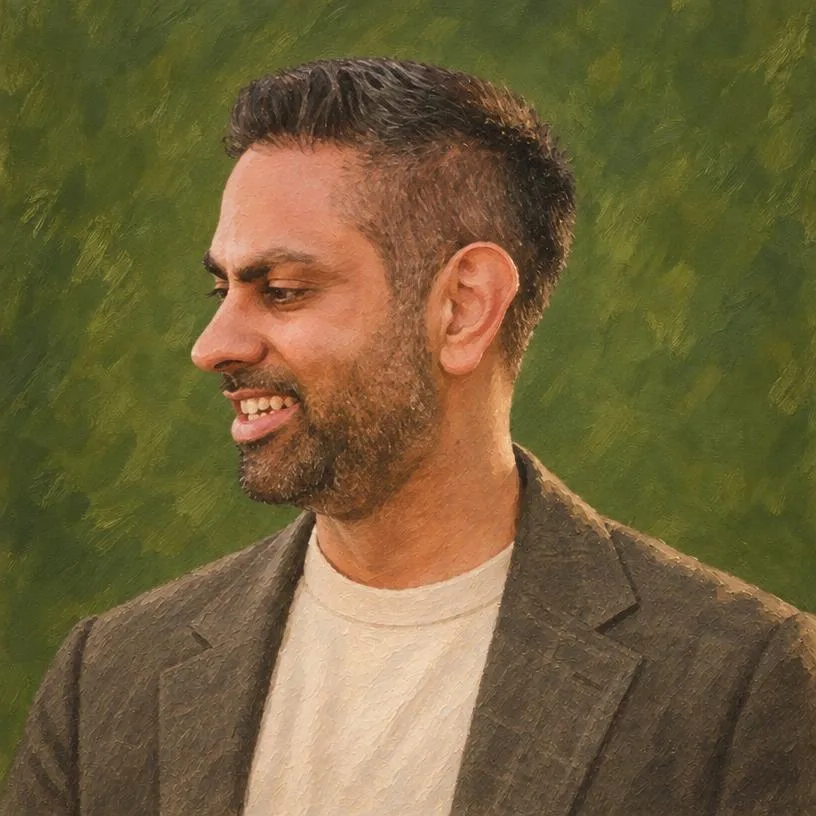
Ramit Sethi
Personal finance author and Rich Life educator
Ramit Sethi helps people build a richer life through practical money systems, thoughtful spending, and honest conversations about what they truly value.
“Getting started is more important than being an expert.”
Listen to story & lessons
The story
Ramit Sethi grew up in California and attended Bella Vista High School in Fair Oaks before studying at Stanford University. He earned a bachelor’s degree in 2004 and a master’s degree in sociology in 2005, combining an interest in technology with social psychology. In his own account, his middle-class family background made paying for college an urgent practical problem, so he built a system for applying to scholarships. He also describes investing an early scholarship check and immediately losing half the money. That story is his recollection, not an independently audited investment record, but it explains the question that shaped his later work: why do intelligent people make money decisions that do not serve them, and what systems could help them act differently?
Sethi began I Will Teach You to Be Rich in 2004 while at Stanford, initially writing about money for people who found traditional financial advice intimidating or unappealing. His approach combined account selection, automation, investing, and earning more with attention to the psychological obstacles behind everyday choices. The title was deliberately bold, but the underlying program focused on ordinary repeatable actions rather than promising a quick trading windfall. His 2009 book, I Will Teach You to Be Rich, became a New York Times bestseller and brought that approach to a much wider audience. He also co-founded the collaboration company PBworks, giving him an entrepreneurial background alongside his growing identity as a writer and teacher. The central invitation was to build a personal system rather than rely on constant financial willpower.
The revised second edition of I Will Teach You to Be Rich appeared in 2019, updating the original program for new readers and circumstances. His work later moved beyond written advice into conversations with couples about the emotions and habits behind their finances. In April 2023, Netflix released How to Get Rich, bringing his coaching approach to television. These formats exposed a recurring difficulty: earning a substantial income does not automatically make people feel secure or help partners agree about spending. His public positioning also challenges familiar assumptions, including the idea that buying a home is always better than renting. His early investment loss remains an important setback in his own telling; his later method emphasizes systems and diversified investing, not repeating that speculative beginner’s mistake.
Sethi’s practical lesson is that money should support a deliberately chosen life, not become an endless exercise in restriction. His conscious spending plan makes room for fixed costs, investing, saving, and enjoyable purchases, while automation helps those priorities survive busy weeks. The approach is useful precisely because it asks people to connect numbers with values and relationships. It also has limits: advice about guilt-free spending needs adapting when someone faces inadequate income, high essential costs, or urgent debt. Sethi explicitly acknowledges both individual responsibility and systemic problems, rather than claiming that mindset alone resolves every financial hardship. A grounded way to use his work is to choose one meaningful goal, improve one financial system, and measure whether the resulting changes actually make daily life more secure and satisfying.
Accomplishments
- In 2004, he began I Will Teach You to Be Rich while studying at Stanford University.
- In 2009, he published I Will Teach You to Be Rich, which became a New York Times bestseller.
- In 2019, he published the revised second edition of I Will Teach You to Be Rich.
- In 2023, he hosted the Netflix personal finance series How to Get Rich.
Top 10 lessons
- 01
Define what a rich life means to you.
Write down specific experiences, relationships, and everyday comforts you want money to support. Sethi’s Rich Life framework begins with your priorities rather than someone else’s definition of success, so turn a vague wish like freedom into concrete goals you can price, schedule, and discuss with the people involved.
- 02
Build a conscious spending plan.
Divide take-home pay among fixed costs, investments, savings, and guilt-free spending. Sethi commonly suggests roughly 50–60% for fixed costs, 10% for investments, 5–10% for savings, and 20–35% for guilt-free spending as starting ranges, not universal rules; adjust your plan when essential expenses or debt make those targets unrealistic.
- 03
Automate your financial foundations.
Set up transfers that move money toward bills, savings, and investments soon after payday. In I Will Teach You to Be Rich, automation reduces the number of decisions needed each month; leave enough checking-account buffer to avoid overdrafts, and review the system when your pay schedule or obligations change.
- 04
Spend deliberately on what you love.
Choose a few spending categories that genuinely improve your life and reduce spending on things you barely notice. Sethi calls these preferences money dials: the aim is not unrestricted consumption, but intentionally funding the experiences you value after accounting for obligations, savings, and investments in your spending plan.
- 05
Question the money stories you inherited.
Notice automatic beliefs such as renting is wasting money or responsible people never spend on themselves. Sethi describes these as invisible scripts; write down where a belief came from, test it against your actual circumstances, and replace it with a more useful rule rather than treating inherited advice as unquestionable.
- 06
Focus on the biggest financial wins.
Prioritize decisions with meaningful long-term effects, including housing costs, expensive debt, account fees, and compensation. Sethi pushes back against obsessing over small purchases while ignoring these larger levers; choose one high-impact action this month, calculate its potential benefit, and complete it before fine-tuning minor expenses that scarcely change your finances.
- 07
Invest simply for the long term.
Learn the basics of diversified, low-cost investing instead of trying to identify the next winning stock. Sethi discusses index funds and target-date funds as practical options; match investments to your time horizon and risk tolerance, and remember that simple investing still involves losses and never guarantees a particular return.
- 08
Increase your earning power.
Look beyond cutting costs by identifying a realistic path to higher income, such as salary negotiation or a marketable skill. Sethi’s work emphasizes earning more alongside money management; document concrete contributions, research compensation ranges, and practice your request before making a negotiation part of your broader financial plan.
- 09
Talk openly about money with your partner.
Schedule a calm money conversation that includes feelings and shared goals, not just balances or blame. Sethi’s couples interviews show how different financial histories shape behavior; review the numbers together, agree on one manageable next step, and make sure both partners understand and can participate in the household’s financial decisions.
- 10
Start before your plan feels perfect.
Complete a useful first step rather than postponing action until you understand every financial detail. Sethi encourages getting most of the way there and improving over time; open an appropriate savings account, organize your balances, or schedule a transfer, then put a review date on your calendar to refine the system.