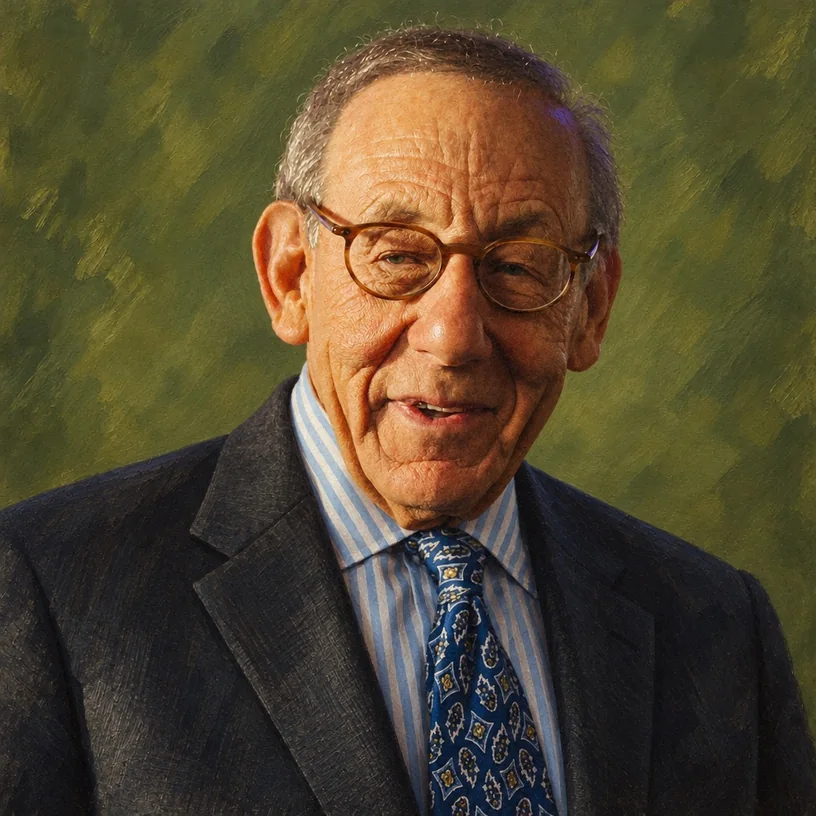
Stephen Ross
Related Companies founder and Related Ross chairman and CEO
Stephen Ross built Related Companies from affordable-housing roots into a major real estate developer associated with Time Warner Center and Hudson Yards. His career combines financing expertise, complex partnerships, and city-scale ambition, alongside significant questions about accountability and public benefit.
“To build a city, you need more than office buildings. You need talent, healthcare, culture, and education.”
The story
Stephen Ross began with legal and financial training rather than a portfolio of landmark towers. Born in Detroit and later raised in Miami Beach, he worked as a tax attorney before moving into investment banking in New York. His early career included being fired from two jobs, an experience he has discussed in interviews. He founded Related in 1972, initially concentrating on affordable housing and the financing structures that supported it. The useful lesson is to start with a domain you understand in detail. Specialized knowledge about taxes, capital, and regulation can create an opening, but it does not remove the need for sound operations.
Related expanded from housing into a broad real estate business, with Ross becoming associated with major mixed-use developments including New York’s Time Warner Center and Hudson Yards. Such projects involve far more than selecting an attractive site: they require financing, tenants, approvals, infrastructure, design, and coordination across many organizations. Hudson Yards brought those dependencies into sharp focus through development above active rail yards on Manhattan’s West Side. For a reader running a smaller project, the transferable method is dependency mapping. Identify the commitments that must happen first, determine who controls each one, and avoid treating a compelling architectural vision as a substitute for an executable sequence.
The scale of Ross’s projects has also made their public consequences important. Hudson Yards has drawn scrutiny over the relationship between private development and public support, and its image as an enclave of luxury has complicated claims of broad urban benefit. Ross’s sports ownership offers an additional accountability lesson. In 2022 the NFL suspended him and fined him $1.5 million after an investigation found tampering violations involving the Miami Dolphins. The investigation did not find that the team intentionally lost games in 2019. Keep those conclusions distinct: ambition and philanthropic work do not cancel misconduct, and criticism should remain tied to what was actually established.
In 2024 Ross founded Related Ross, directing renewed attention toward West Palm Beach and South Florida. In interviews he describes a city-building agenda that connects offices with education, healthcare, housing, and cultural life. Those statements explain his strategy; they are not independent proof that every promised community outcome has occurred. His broader career suggests both the power and the limits of a long horizon. Durable development requires patient capital and coordination, but it also requires listening to residents and respecting rules. Apply the ambition by planning beyond the first transaction, and apply the caution by measuring who benefits, who bears the costs, and who can challenge decisions.
Accomplishments
- Founded Related Companies in 1972, beginning with affordable-housing development.
- Led the company associated with New York’s Time Warner Center and Hudson Yards developments.
- Became owner of the Miami Dolphins and helped bring Formula 1 racing to the Hard Rock Stadium campus.
- Founded Related Ross in 2024 with a focus on West Palm Beach and South Florida.
Top 10 lessons
- 01
Begin with specialized knowledge.
Ross’s tax and financing background informed Related’s early affordable-housing business. Choose a problem where your expertise helps explain costs, constraints, or incentives that others overlook. Validate the opportunity with people who will use or fund the result, rather than assuming technical knowledge alone creates demand.
- 02
Study how the capital structure works.
Before committing to a project, understand debt terms, equity expectations, cash timing, and the consequences of delay. Real estate depends on matching long-lived assets with workable financing. Ask what happens under less favorable assumptions, not simply whether the optimistic version produces an attractive projected return.
- 03
Map dependencies before making promises.
List the approvals, financing, tenants, construction steps, and infrastructure on which delivery depends. Large developments such as Hudson Yards make these relationships visible. Assign responsibility and decision dates so that one unresolved prerequisite does not silently undermine a schedule that everyone else is treating as firm.
- 04
Win partners with a specific shared benefit.
A complicated project requires stakeholders whose incentives differ. Explain what each partner gains, what they must contribute, and which risks remain theirs. Replace a general appeal to your vision with a concrete agreement that can survive personnel changes, slower progress, and less favorable market conditions.
- 05
Plan for places, not isolated products.
Ross argues that cities need education, healthcare, culture, and talent alongside office space. When designing a service or development, consider the surrounding conditions that make it usable. Identify what you can supply directly, what requires partners, and what must not be promised without resources or authority.
- 06
Make the long horizon financially credible.
Translate a multi-year vision into phases with separate funding needs and evidence thresholds. Ross’s projects show the coordination required for long development cycles. Patience is useful only when the organization can sustain it; avoid using a distant payoff to dismiss immediate liquidity problems or weak execution.
- 07
Treat public support as an obligation.
If your venture benefits from infrastructure, incentives, or public approvals, explain the expected public return and how it will be assessed. Hudson Yards illustrates why this matters. Seek feedback from affected residents and distinguish benefits that are contractual and measurable from outcomes that remain aspirational.
- 08
Keep ambition inside the rules.
Build compliance checks into important negotiations instead of treating rules as an obstacle for someone else to manage. The NFL’s 2022 sanctions against Ross demonstrate that senior owners are accountable too. Give advisers and employees a clear route to stop a proposal that crosses legal or contractual boundaries.
- 09
Separate a leader’s claims from evidence.
Use founder interviews to understand intentions, then look for independent measures of results. Ross’s city-building statements describe an agenda rather than proving its effects. Apply the same standard to your own work by reporting completed outcomes separately from projections, commitments, and benefits you hope will follow.
- 10
Measure who gains and who pays.
Assess a project through more than asset value or tenant demand. Examine affordability, access, disruption, and the distribution of benefits and costs. Ross’s career makes those questions unavoidable at city scale, but even a small organization can ask whose experience is missing from its preferred success metrics.
Books
- No books yet — start with the interviews.